Adam Bartlett
Mar 19, 2026
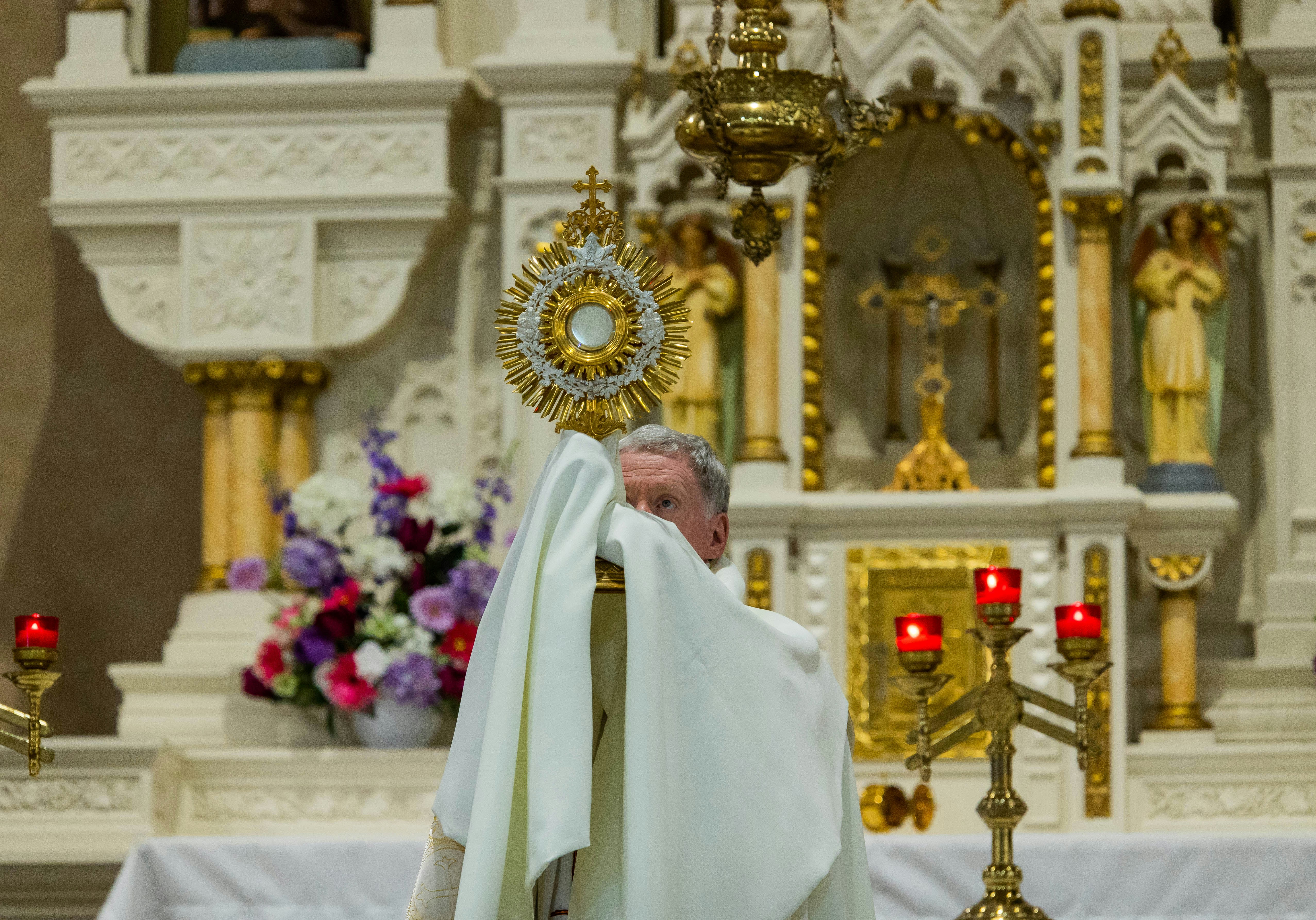
Holy Thursday begins the Sacred Paschal Triduum with the Mass of the Lord’s Supper, one of the most solemn and symbolically rich liturgies of the year. The Chrism Mass is also ordinarily celebrated on Holy Thursday earlier in the day by the bishop in his cathedral church, although it is sometimes transferred to another day for logistical reasons.
For parish music directors, cantors, choirs, clergy, and liturgy coordinators, it also introduces several musical moments that require careful preparation, from the Gloria and the Washing of Feet to the procession with the Blessed Sacrament at the end of Mass.
This guide is the second part of a five-part Holy Week music series. Together, these guides walk through the principal liturgies of Holy Week and the music proper to each one:
Holy Thursday
In what follows, we will focus on the major musical decisions unique to Holy Thursday and offer practical guidance to help you prepare them well. Throughout, we also reference resources from Source & Summit that many parishes use to organize chants, readings, and rubrics so that the liturgy can unfold with clarity, solemnity, and prayerfulness.
The Role of Music in the Triduum’s Liturgies
The essential significance of Holy Thursday is contained in the words of the Eucharisic Prayer for the Mass of the Lord’s Supper, immediately before the words of consecration:
“On the day before he was to suffer for our salvation and the salvation of all, that is today, he took bread in his holy and venerable hands…”
In every liturgy, the events that we commemorate are made sacramentally and actually present to us. We do not merely recall and remember events that happened once before—we are truly there in the midst of them. In every single Mass, we enter the upper room with Christ and are invited to go with him through his death and resurrection. But in the Paschal Triduum, beginning with the Mass of the Lord’s Supper on Holy Thursday, we have the opportunity to enter into these mysteries in an especially extraordinary way.
The role of parish musicians in the Triduum is fundamentally important. The words and chants that we express and direct are a window into the mystery, offered as a sensible sign that can help make these otherwise invisible realities tangible for us all.
Here are some helpful tips, along with some scores and audio recordings from Source & Summit, to help you prepare for a beautiful and solemn Holy Thursday at your parish.
How Holy Thursday’s Music Works
Holy Thursday begins with the Mass of the Lord’s Supper, which starts in the usual way but leads into several musical moments unique to this liturgy. Parish musicians should especially prepare for the Gloria, the Washing of Feet if it is celebrated, the Offertory, and the transfer of the Blessed Sacrament at the end of Mass. Because the liturgy opens the Paschal Triduum, its musical structure is both solemn and unusually continuous, extending beyond the normal conclusion of Mass.
Key musical moments:
The Gloria
The Washing of Feet
The Offertory
The Transfer of the Blessed Sacrament
Holy Thursday Music Preparation Guide
The Mass of the Lord’s Supper begins in the usual way, although it will end quite differently. The liturgy begun on Holy Thursday will not conclude until late on Saturday evening with the final alleluias of the Easter Vigil.
The Gloria (Glory to God in the highest) is sung while bells are rung. After this, all bells will remain silent until the Gloria of the Easter Vigil.
The Mass continues into the Liturgy of the Word as usual. Following the homily, ordinarily but not necessarily, the Washing of Feet begins.
The Washing of Feet
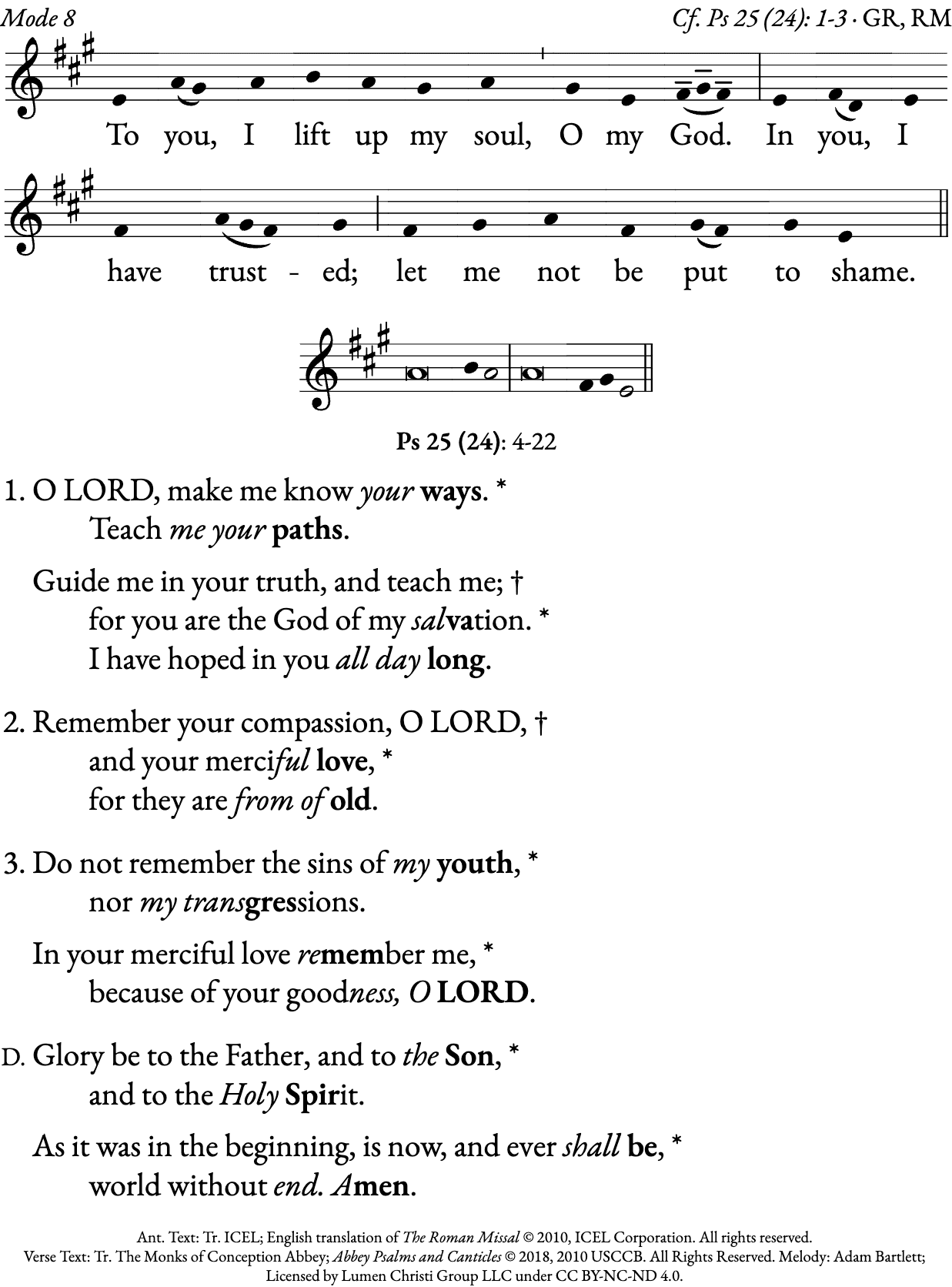
There are seven antiphons given in the Roman Missal and Graduale Romanum to accompany the Washing of Feet. Each antiphon is a scriptural text, predominantly from John 13, that speaks to a different aspect of the significance of this mystery.
There are a few different ways that these antiphons can be employed:
Option 1: Sing the Antiphons in Succession
In the first case, the antiphons alone can be sung in succession, without any additional verses added. In this way they form a kind of narrative story that begins with context, followed by Christ addressing the disciples, and then the disciples’ response, and that concludes with the words of Christ as he unpacks the spiritual significance of his action. Each antiphon can flow seamlessly into the next, forming a continuous stream of reflection on the mystery being re-presented before us.
Option 2: Select Several Antiphons and Add Verses
Another approach is to select a few of the antiphons and to sing them with Psalm verses. The Source & Summit Digital Platform offers musical settings for each antiphon, along with verses that are not otherwise found in the Roman Missal. It also provides practice audio recordings to help your singers learn these settings well. Not every verse needs to be sung for each antiphon, but singing some verses can allow for enough repetition to make it easier for the choir and congregation to sing the antiphons confidently.
Option 3: Use One Principal Antiphon For the Whole Rite
And lastly, a single antiphon could be selected and sung throughout the majority of the Washing of Feet, with Psalm verses sung between each repetition of the antiphon. In this way, congregational singing could be more easily encouraged, and choirs who are learning a lot of new music for Holy Week can ensure that they are taking on a manageable load. In this case, a single cantor might still begin by singing either Antiphon 1 or 2, followed by the antiphon with multiple verses that can be sung by all.
The sixth antiphon, I give you a new commandment, is perhaps the most emblematic of them all. Its Latin text “Mandatum novum da vobis” gave Holy Thursday the colloquial name of “Maundy Thursday” in the English-speaking world, with “maundy” being a derivative of “mandatum”. A parish introducing the antiphons for the Washing of Feet for the first time might opt to begin here.
Click below to view and listen to the chants of The Washing of Feet in an Ordo created on the Source & Summit Digital Platform:

Holy Thursday: The Washing of Feet
Transfer of the Blessed Sacrament
Following the reception of Communion, the Mass of the Lord’s Supper takes a different turn and leads us toward the next stage of the Paschal Triduum. Just as Christ and his disciples departed the upper room to pray in the garden and await what is to come the next day, we are invited to follow him into a chapel or other location to pray and remain with him through the night.
The Roman Missal prescribes the singing of the Pange lingua during the Eucharistic Procession from the church to the place of reservation. This hymn, whether it is sung in Latin or English, set to its typical tune or to a metrical melody, is sung in a particular way: Only the first four verses are sung during the procession, and the final two (the Tantum ergo) are only sung once the procession reaches the altar of repose and during the incensation of the Blessed Sacrament.
If the procession is short, it is not necessary to sing all of the first four verses of the hymn. If it is long, the first four verses can be repeated many times, returning to the first verse after the completion of the fourth. Verse four does not need to lead directly into verse five. The timing of the incensation is more important than strict continuity in the hymn.
Click here to listen to this hymn in both Latin and English:
Holy Thursday: Transfer of the Blessed Sacrament
Holy Thursday Tips for Parish Musicians
If you are preparing music for Holy Thursday at your parish, the following practical points can help the liturgy unfold more smoothly and ensure that the proper chants are used in their proper places.
Let the Washing of Feet music cover the whole rite
The Washing of Feet is preceded and followed by a preparation by the priest as well as the approach of those who will have their feet washed. The antiphons for this rite can be sung during this entire time. The singing should conclude prior to the priest celebrant arriving back at the chair.
Keep Ubi Caritas in its proper place
Note also that the Ubi caritas is not one of the antiphons for the Washing of Feet, even though this chant, or a choral setting of it (perhaps Duruflé or another setting), is sometimes sung in parishes at this time. Resist this temptation! Ubi caritas (Where true charity is dwelling) is actually the proper Offertory Antiphon for the Mass of the Lord’s Supper in the Roman Missal and Graduale Romanum. Be sure to put it in its proper place!
Coordinate the procession route and choir placement in advance
Be sure to plan for where the singers will be placed in the procession. If you have a large choir, consider dispersing at least some of the singers in with the rest of the congregation to help unify and promote the singing in the procession by everyone. Also, plan for where the choir will assemble when they arrive at the altar of repose.
Choose a manageable musical approach for the rite
Holy Week places a heavy load on choirs and cantors. If your parish is new to the proper antiphons for the Washing of Feet, it may be wiser to begin with one principal antiphon or a smaller number of texts rather than attempting everything at once. A simpler selection, sung confidently, will usually serve this rite better than an overly ambitious one.
Conclusion
Holy Thursday invites the Church to enter deeply into the mysteries of the Lord’s Supper, the commandment of charity, and the beginning of the Paschal Triduum. For parish musicians, careful preparation makes it possible for these moments to unfold with greater clarity, especially in the Washing of Feet and the transfer of the Blessed Sacrament.
When the proper chants are prepared thoughtfully and placed in their proper liturgical context, the music does more than fill ceremonial space. It helps the parish pray the liturgy as the Church intends and leads the faithful more deeply into the mystery being celebrated.
Continue reading: Good Friday Music Guide →