Adam Bartlett
Sep 30, 2026

As the founder of Source & Summit, I have often reflected on the way that God brings about new initiatives in the Church’s life and calls forth leaders to lead them. Most often it is not because founders are endowed with extraordinary gifts and vision so much as they are enabled, through the divine ordering of the circumstances of their life, to see some things from a different perspective than many of the others around them—and then are given the opportunity to respond in faith to the needs that they perceive. This has certainly been the case in my own life, as well as in the genesis of the Source & Summit Missal.
As an early Millennial, I had the opportunity to experience the closing chapter of cultural Catholicism in the US in the 80s and 90s, and then became a subject of the new evangelization at the turn of the millennium as I watched 9 in 10 of my peers leave the practice of the faith as young adults. I had the privilege of coming of age amidst the Church’s turn toward authentic liturgical renewal in the first decade of the 20th century as Pope John Paul II handed his papal program on to his successor Pope Benedict XVI. With the help of several good mentors and some extraordinary formative experiences, a flame was lit inside of me to help bring about an authentic renewal of liturgical music that took twenty years to mature and find expression in the Source & Summit Missal and Digital Platform.
As the Source & Summit Missal nears its 6th year of publication, and as thousands of parishes across the country continue to discover it and put it into use, its fundamental mission remains the same. Here is the story of why we created it and how it is set apart from any other pew resource available today.
The Need: To Sing the Mass
The principal need for the authentic renewal of liturgical music is to sing the Mass rather than merely to sing at Mass. To sing the Mass, in the first place, means to sing the words of the Mass found in the liturgical books using melodies that sacramentalize the song of the Trinity and of the liturgy of the Heavenly Jerusalem.
For most Catholics in the decades preceding and following the Second Vatican Council, the experience of liturgical music has been geared more toward singing at Mass than singing the Mass itself—with an emphasis on singing devotional hymns and songs taken from outside of the liturgy within the context of a mostly spoken form of liturgical celebration. In contrast, as both the General Instruction of the Roman Missal and Musicam Sacram describe, the words of the Mass are meant to be sung as the primary and essential song of the liturgy.
The model given in Musicam Sacram for the implementation of the Council’s directives on music specifically calls for the sung Mass (Missa Cantata) to be the norm for all parishes, especially on Sundays and Holy Days. In contrast with the preconciliar precedent where either everything was sung or nothing could be sung, it allows for the sung parts to be added gradually and progressively in order to help every parish sing the liturgy to the greatest extent possible at any given time and in any context.
Ironically, the vast majority of musical resources that followed the Council and that remain in use today are built not on the model of the sung Mass with the possibility of progressive implementation over time, but on the spoken, or recited Mass with devotional hymns added at the beginning and end, and during the Offertory and Communion processions.
The Source & Summit Missal is a decisive response to the need to help parishes sing the Mass, to the greatest extent that they can over time, including its Order, Ordinary, and especially its Proper antiphons for the Mass processions.
The Journey to Source & Summit
The Source & Summit Missal is not the creation of a committee, but is the fruit of over 15 years of experience in actively fostering the sung liturgy in a variety of capacities and contexts. Its forerunner—Simple English Propers, published by the CMAA—was the result of more than a year of community feedback before its official publication in 2011. I founded Illuminare Publications in 2012 and began working on the Lumen Christi Missal and Hymnal, which sold over 60,000 copies over an eight-year period. I also continued to develop and release what is now called the Source & Summit Gradual through free digital downloads reaching thousands of parishes in the English-speaking world. During this time, I received invaluable feedback from musicians, pastors, and parishes that helped refine and define the eventual work of Source & Summit.
During this time I also had the opportunity to offer hosts of training workshops and talks for parish musicians and clergy alike, helping me to better understand the different contexts and needs of parish liturgy and music programs on every level. I also had the opportunity to teach seminarians to sing the Mass over a two-year period, and to teach graduate students of liturgy and the new evangelization on several occasions. And perhaps most interestingly, I also served on a committee that worked on the musical aspects of several official liturgical books while simultaneously serving as a sacred music consultant for the Fellowship of Catholic University Students (FOCUS), helping them to unite the ideals of authentic liturgical and music renewal with on-the-ground evangelization efforts in their national conferences and in the training and formation of student missionaries.
All of this varied experience, united to the efforts of a world class team, led to the creation of the Source & Summit Missal and its digital counterpart the Source & Summit Digital Platform.
How the Source & Summit Missal is Different
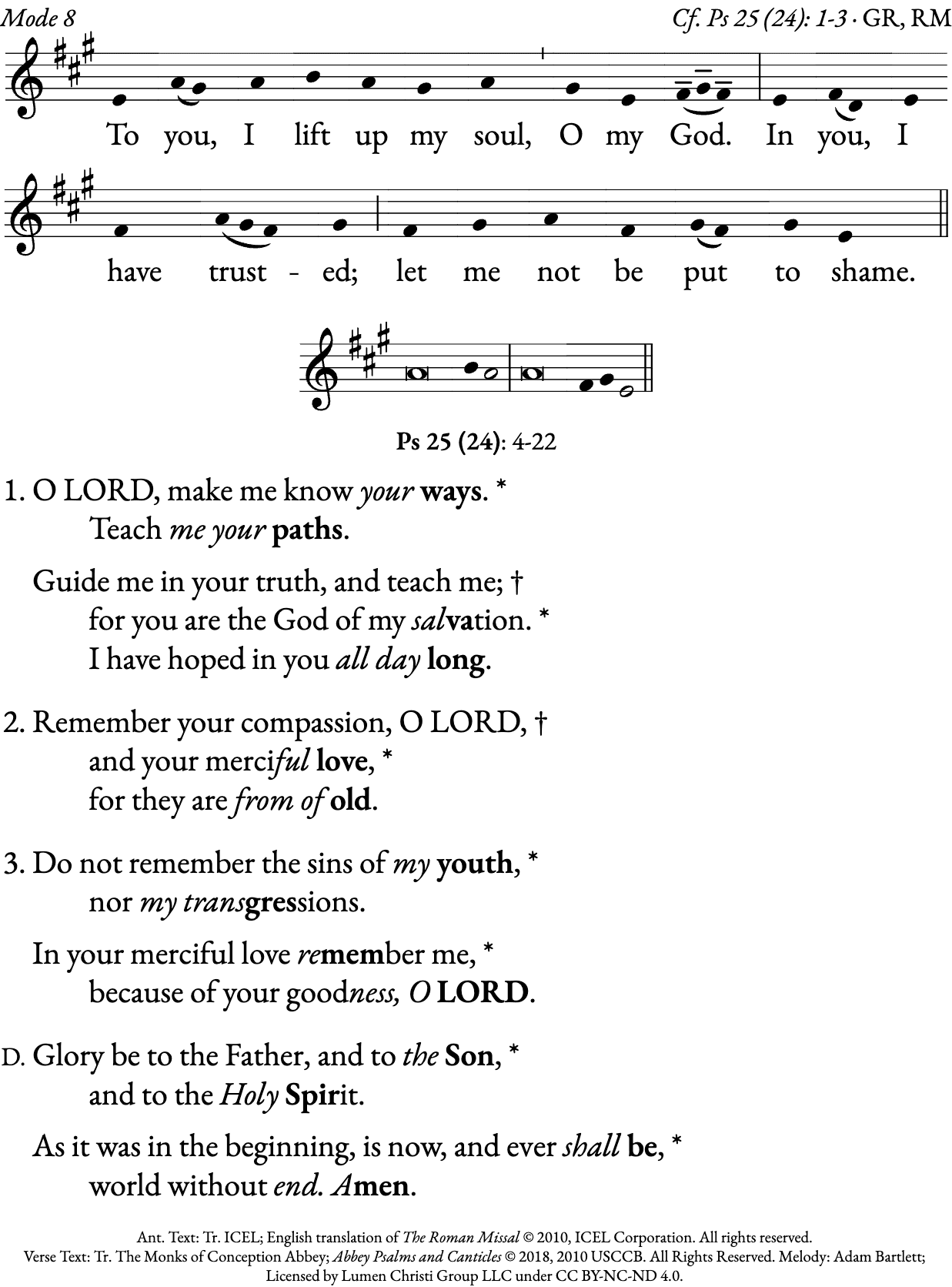
The defining feature of the Source & Summit Missal that sets it apart from any other pew resource on the market is that it contains through-composed musical settings of the full Proper of the Mass—including the Entrance, Offertory, and Communion Antiphons in addition to the Responsorial Psalm and Alleluia—for every Sunday and Major Feast of the liturgical year. I composed the settings in the Missal specifically for congregational singing, and hundreds of parishes across the country have been singing them regularly with success for years, and often for more than a decade. They are also sung regularly at national conferences across the US, including the recent National Eucharistic Congress and the SEEK conference, as well as in many seminaries and religious communities. The musical balance of these antiphon settings makes them both approachable and eminently singable while having a musical quality that will endure over time.
Additionally, the processional antiphons for both Sundays and Weekdays are pointed for singing in an even simpler form using one of eight simple tones found in the back of the Missal. While a single tone is suggested for each antiphon text with a roman numeral in the Missal, any of the eight tones can be used with any antiphon. In this way, a parish might begin by introducing the Entrance or Communion Antiphon using a single tone for an entire season, and then add another in time, eventually singing the more melodious, fully-notated settings with more regularity. Every antiphon for every Sunday can be sung in up to nine different ways in the missal. Even more antiphon settings in various languages and levels of complexity can be found on the Source & Summit Digital Platform and incorporated in ways that surround and complement the Missal.
The Source & Summit Missal also includes chant-based Responsorial Psalm antiphons and Alleluia settings taken largely from the Gregorian chant tradition as found in the Graduale Simplex. The sung proper of the Mass is not found in a separate section of the Missal, but right in line with the Readings (and Orations in the Companion Edition) in the main body of the book.
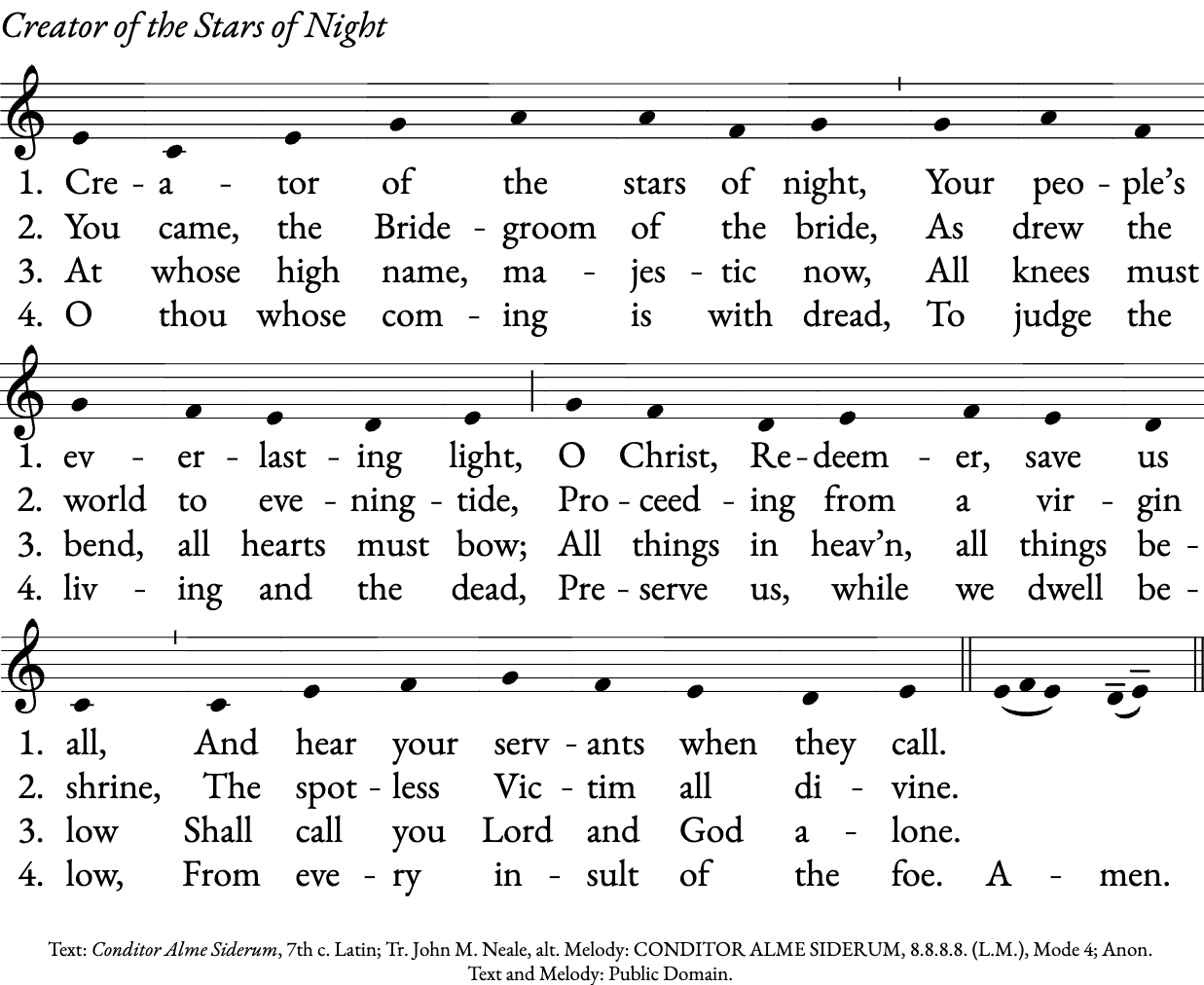
In addition to the Propers section, the Missal also contains the fully sung Order of Mass and settings of the Ordinary of the Mass (Mass Settings) in English and Latin, in both chant and metrical settings, that provide a substantial repertoire for parish use.
The latter half of the Missal contains hymns and devotional prayers that are theologically rich and in conformity with Church teaching, and taken from the established core that most Catholics will be (or should be!) familiar with. While many other hymnals and missals contain upwards of 1000 hymns and songs, most parishes only use a small fraction of them. The 325 hymns in the Source & Summit Missal amply cover the needs of the liturgical year and complement the singing of the proper antiphons exceptionally well.
The Source & Summit Digital Platform, which comes with every Missal subscription, is really what sets the Missal apart from any other. While print accompaniment books are also available, the Digital Platform integrates virtually all aspects of the music and liturgy preparation process for parish musicians into an easy-to-use and time-saving digital experience. For parishes beginning to implement the sung liturgy, all the way through cathedral programs with professional choirs, the Digital Platform is the trusted tool of music directors and coordinators, helping them prepare and customize their music, share it with their musicians, and create custom booklets and packets in minutes. The task of implementing the sung liturgy used to be a complicated and overwhelming task for parish musicians—but with the Digital Platform, it is easy and delightful.
Musical Renewal in Every Parish
Since our launch in 2020, Source & Summit has become an established leader in helping parishes everywhere sing the Mass, and is a trusted partner in the work of authentic liturgical renewal. We are serving over 5% of all parishes in 88% of all US dioceses, and our resources are used in over half of all US major seminaries as well as the North American College in Rome. And our real work is only just beginning.
We would love to partner with your parish to help you elevate the liturgy in whatever way that we can. The work of authentic liturgical renewal is a slow and patient process, but we are here to assist you wherever you are on your journey. If your parish is ready to take the next step, we would love to hear from you.