Source & Summit
Sep 3, 2026

Many of the pastors we talk with often feel stuck when it comes to addressing the state of their parish music programs. For most of them, the music, musicians, and music resources were well-established for years, if not decades, before they arrived. They are always grateful for the dedication of their musicians, but the liturgical music culture has been mostly stagnant for as long as anyone can remember. While perhaps no one in the parish is particularly excited about the state of the music, at least everyone is used to it. There is no controversy, even less enthusiasm, and no real questioning of the state of affairs—it just is what it is.
The same pastors, as they look out at their half-empty pews, might often wonder who should be there but is not due to the mass exodus of younger generations of Catholics over the past quarter century. They surely dream about their church being filled with young, faithful families and the sounds of beautiful sacred music resounding amidst a chorus of crying babies. But they may not feel confident that they can shepherd their parish from point A to point B without destabilizing parish life, or upsetting the comfortable aging parishioners who pay their bills.
Some pastors tell us that they hope to address the music issue eventually, but aren’t sure when or how, while they turn their attention to areas where they feel they can actually make an impact.
What many of them might not realize is that they can begin taking concrete steps now to set their parish music programs on the path of renewal without having to commit to a dramatic, complete, or potentially tumultuous overhaul.
Over the past decade or more, hosts of pastors have been working toward real and lasting musical renewal—and without revolts or drops in their collection. Many are even seeing young families arrive, collections increase, and OCIA rosters begin to swell.
Here are five proven ways to begin the process of renewing the liturgical music in your parish. Certainly every parish is different and no context is identical, but, for the most part, a great number of pastors find themselves in essentially similar situations. These strategies have a track record of success with hundreds, if not thousands, of parishes and can serve as a trustworthy guide to help you take the first steps toward elevating the liturgy through sacred music in your parish this year.
Start with Why
Author Simon Sinek has famously encouraged leaders to inspire trust and buy-in by starting not with what, or how, but with why. Once people understand why something is important, they will often be much more willing to embrace it. In other words, as Sinek says, “people don’t buy what you do; they buy why you do it.”
Some pastors, when attempting to renew their music programs, have made the mistake of emphasizing the what and the how before addressing the question of why it is important.
Perhaps they simply begin by changing what music is sung—white and black lists of hymns, putting a new missal or hymnal in the pews, even hiring a new music director—with hopes that their music problems will immediately be solved. At first, it might even look like a successful and quick fix, at least on the surface. But without an understanding of the why, many people in the pews who are content with the status quo are bound to be left confused and disoriented, or maybe even angry and afraid.
Or a pastor might begin by emphasizing the how, by getting practical training for his musicians and ensuring that his congregation is taught thoroughly how to sing new music, with meticulously slow introduction of new repertoire. Both of these are excellent aims, but without a sense of why what they are doing is important, people may be less than inspired to make the effort.
While all of these things are immensely important, they should not come first. They should always be preceded with, or at least accompanied by, a compelling reason for why any of it matters. And one of the greatest problems we face today is that most people lack an understanding of the purpose of music in the liturgy, and even the meaning and purpose of the liturgy itself as it is distinct and set apart from everything else that we do. We take this approach ourselves when we meet with parish musicians at diocesan workshops, and we encourage pastors to do the same.
Add without Taking Away
Another challenge that pastors often encounter as they begin renewing their music programs is the result of immediately replacing familiar music with something that is new or foreign to their congregations. The blowback they often experience is not necessarily because their parishioners reject what is new so much as they grieve the loss of what they are familiar with. This, of course, is human nature, and should be taken into account during any transition.
Parishes with the most lasting success often take the approach of introducing what is new without immediately taking away the old. When new hymns are introduced, they might be used during Communion or at the end of Mass, while the Entrance and Offertory retain something familiar. When the Entrance or Communion Antiphons are first introduced, they can be sung immediately after the opening hymn or before the Communion hymn. New Mass Settings can be introduced for a season, and then immediately followed by something familiar. A parish might introduce their new schola cantorum at a new weekday evening Mass, rather than at the principal Sunday Mass—or they might first sing for the Christmas Midnight Mass, the Triduum, or for Pentecost. And once these new elements begin to become familiar, the attachment to the old can gradually give way to the new. And once the renewal effort is in full force on Sunday, perhaps one weekend Mass can continue with more of the legacy music model while the principal Mass takes on greater solemnity.
It can be tempting to try to change everything at once, but most pastors who retain their sanity and peace take a more gradual approach by adding at first without immediately taking anything away.
Begin Singing the Order of Mass
One of the most immediately impactful aspects of parish musical renewal that a pastor can make, which doesn’t even involve his music program at all, is singing the parts of the Order of the Mass. It only requires his voice, a few notes, and the voices of the people in the pews. The Order of Mass, along with the orations or presidential prayers, constitute the first degree of importance described in Musicam Sacram 28-29. In the Church’s mind, this is the fundamental song of the liturgy that should be sung before anything else. And, in the experience of many parishes, nothing can do more to shift the musical culture of the liturgy than singing it regularly as the normal form of celebration.
Some priests might shy away from this idea, believing that they are just not a good singer. Fortunately for them, the Church in her wisdom already offers the simplest melodies possible for both priest and people, all of which are right in the Roman Missal and readily available with practice recordings in various places online.
Chanting the Order of Mass does not require a trained singer. Since chant is “sung speech”, any priest who can already recite the words of the Mass well is already half of the way to chanting them well. With a little practice, any priest can do what the Church asks of him, and take a massive step forward toward the goal of lasting musical renewal.
Make the Antiphons Normal
One of the primary characteristics of the parish music status quo of the past 60 years is the practice of replacing the proper texts of the liturgy for the Entrance, Offertory, and Communion processions with other devotional hymns and songs taken from outside of the liturgy. Of course, this is technically possible given the fourth option of GIRM 48, 74, and 87, however the common practice is a somewhat surprising contradiction of the Second Vatican Council’s insistence that the faithful be led into a fully conscious and active participation in the prayer of the liturgy itself, rather than in devotional activities that effectively supplant the actual prayers and words of the Mass. In other words, singing the scriptural antiphons of the Mass means singing the Mass, rather than singing at Mass.
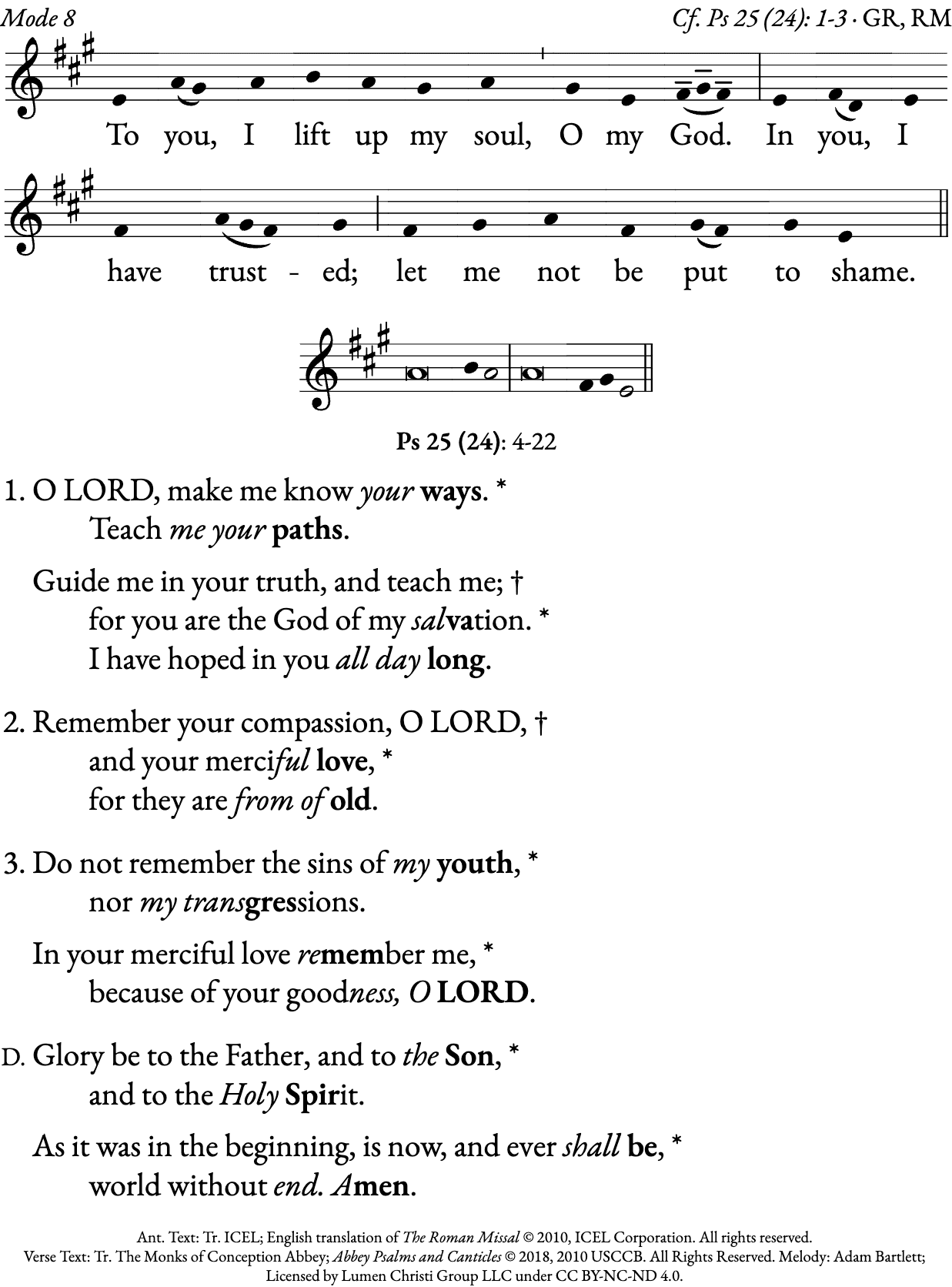
Making the antiphons a normal part of parish liturgical life is a major step toward overall musical renewal, and it doesn’t have to be complicated or controversial in any way. A parish might begin by simply singing the Entrance Antiphon, with or without a verse, following the Opening Hymn, or by singing the Communion Antiphon as soon as the priest receives communion, just as the GIRM prescribes, with more than enough time for a Communion hymn or two afterward. Even more, priest celebrants can and should preach on the antiphons of the Mass on occasion, given the encouragement by GIRM 65 to do so. The antiphons are not merely travelling music for processions, or musical interludes in the Mass—they are a lens to see the mystery of the liturgy through, much like the readings and orations.
If the congregation is encouraged to sing the antiphons as well (with settings designed for congregational singing like those in the Source & Summit Missal), eventually the need for hymns will diminish and the words of scripture will be more deeply impressed on the minds and hearts of the faithful. Thousands of parishes have introduced the sung antiphons with tremendous and lasting success, and any parish can do the same with gentle implementation surrounded by steady catechesis.
Get the Resources You Need
Ultimately, the renewal of a parish music program will depend on getting the resources needed for success, whether that involves a change in pew resources or implementing supplemental resources that can help facilitate a gradual transition over time.
For parishes that are ready, the Source & Summit Missal, Standard Edition can fully replace your existing missal or hymnal and give your parish access to the readings, time-tested and theologically reliable hymns, proper antiphon settings for congregational singing, chant-based Responsorial Psalms and Alleluias, beautiful Mass Settings, the sung Order of Mass, and a rich offering of devotional prayers and resources for the Sacrament of Penance. This is the best option for parishes ready to make a change in their pew missal this Advent.
For parishes that already have a hymnal or music resource in the pews but still want a “missalette” for readings and propers, the Source & Summit Missal, Companion Edition can serve as an ideal stepping stone toward the renewal of your parish music program. The Companion Edition offers everything found in the Standard Edition, except without the hymns, while also offering the priestly orations and a more generous selection of devotional prayers. This resource is ideal for implementing the antiphons and new Responsorial Psalms and Alleluias without needing to make any changes to your existing hymn repertoire.
Parishes that aren’t ready for any pew resource change can still make meaningful progress toward musical renewal—while making their musicians’ lives much easier at the same time—with the Source & Summit Digital Platform. The Digital Platform can integrate with any music program while opening the door to deeper musical renewal. It allows parish music leaders to upload their own music library, access various native music libraries, prepare custom Orders of Worship (Ordos) for any celebration, share music and practice recordings with their singers, and create custom music packets and worship aids in minutes. With music suggestions offered by Source & Summit from a variety of other missals and hymnals, the Digital Platform can help build a bridge toward lasting musical renewal without having to make any sudden or dramatic changes.
For parishes that may simply want to begin implementing the antiphons of the Mass, exploring chant-based Responsorial Psalms and Alleluias, or enriching their hymn repertoire, printed Accompaniment / Choir Editions are also available at a low cost.
A Partner for Your Parish
Any pastor in any parish can begin taking concrete steps now to elevate the liturgy through sacred music. Start with why, add before taking away, sing the Order of the Mass, make the antiphons normal, and implement the resources you need.
Renewing your parish music program, however, is not a project that you need to take on alone. Source & Summit would like to be a partner with you in your efforts and is available to help you determine which path is best for your parish. We would love to set up a call to discuss your needs. Depending on what is right for you and your parish, we can send a sample copy of the Missal, prepare a quote, or get your musicians started with a free digital trial.
Wherever you are in your efforts to elevate the liturgy, we would love to hear from you. Reach out, and let’s get started together.